

Service

Service

The Relationship Between Healthcare Revenue Accuracy And Contract Modeling

Healthcare companies work in a complex financial environment where contracts, payer restrictions, service classifications, and agreed-upon payment periods all affect reimbursement. If projected payments are not computed correctly, revenue may still be insufficient even in cases when patient care is provided correctly and claims are filed precisely. This is where the value of healthcare contract modeling increases. Healthcare companies may get an organized understanding of how payer agreements could result in real reimbursement via contract modeling. Organizations may increase revenue accuracy, spot inconsistencies, and make better financial operations choices by converting complicated contract terms into quantifiable financial expectations. Recognizing The Effect Of Healthcare Contracts On Revenue The regulations governing the reimbursement of services are established by contracts between payers and healthcare providers. Different payment methods, reimbursement terms, exclusions, modifications, and other financial clauses may be included in these agreements. The problem is that a contract’s financial effect is not always apparent just by holding it. According to the provisions of the agreement, revenue teams must comprehend what the company may fairly anticipate receiving. Contract modeling facilitates the conversion of such concepts into useful financial data. Healthcare companies might create predicted reimbursement projections based on their contractual agreements rather than depending just on past payments or general assumptions. Increasing The Reliability Of Revenue Expectations Setting reasonable expectations is the first step toward accurate revenue. It is more difficult to assess whether payments are appropriate when projected reimbursement is computed improperly. Organizations may predict anticipated reimbursement before or after claims are processed with the use of healthcare contract modeling. Revenue teams may better assess real payments by applying relevant contract conditions to service and financial data. Financial reporting may also be enhanced by this visibility. Finance teams may be more equipped to identify any deviations and look into odd payment patterns when companies have a better grasp of anticipated income. Finding Payment Deviations Receiving a payment from a payer does not guarantee that it accurately represents the conditions of the contract. Disparities may arise due to processing problems, how contracts are interpreted, how claims are adjusted, or other reasons. It could be difficult to spot minor disparities if there is no efficient way to determine anticipated compensation. A foundation for comparing anticipated payments with actual reimbursement is provided by contract modeling. Instead of presuming the payment is accurate, revenue cycle teams may look into the reason for any discrepancies. This method may eventually identify recurrent trends. Similar deviations involving a certain payer, service category, or contract condition may point to a problem that needs further investigation. Encouraging Improved Contract Discussions Contract modeling is helpful before and after contracts are signed. Additionally, it may provide insightful information during payer negotiations. Healthcare companies might assess suggested conditions for reimbursement and think about how various situations can impact future earnings. This enables decision-makers to take into account an agreement’s wider financial ramifications rather than just specific rates. Organizations may identify contract clauses that might cause financial difficulties by modeling various situations. More informed conversations with payers may be facilitated by having more precise information prior to the conclusion of negotiations. Increasing The Visibility Of Finances Accurate knowledge of income generation is necessary for sound financial planning. Forecasting may become less reliable when contract data and reimbursement assumptions are separated. More insight into anticipated financial performance may be obtained by including healthcare contract modeling into a larger revenue management plan. When assessing revenue patterns, finance teams may leverage contract-based insights in addition to operational and historical data. The relationship between financial information and contractual conditions may also enhance communication across the revenue cycle, contracting, and finance teams. Departments might refer to a more uniform knowledge of anticipated reimbursement rather than operating under disparate assumptions. Creating A Revenue Process That Is More Accurate The accuracy of healthcare revenue is dependent on several interrelated procedures, ranging from coding and documentation to filing claims and reconciling payments. Another crucial component of such a system is contract interpretation. Organizations may better understand what they should be paid, compare expectations with actual compensation, and pinpoint areas that need more research with the use of effective contract modeling. Additionally, it may provide helpful data for future contract discussions and predictions. Accurate contract interpretation is becoming more and more crucial as healthcare reimbursement grows to require complicated payment arrangements. Healthcare organizations have a better basis for safeguarding revenue integrity and making wise financial choices when contract conditions are linked to quantifiable revenue projections.
Service

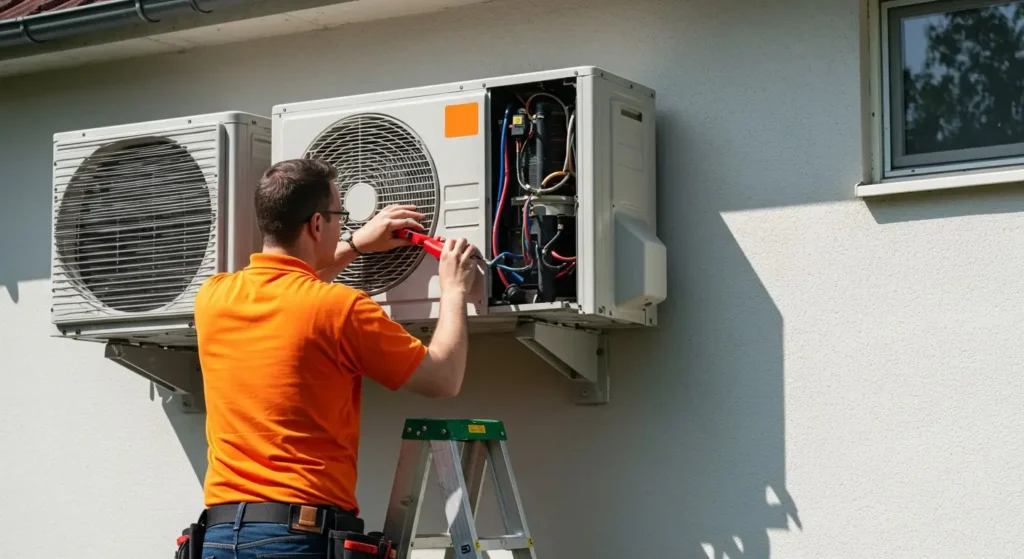
7 Signs Your Air Conditioner Needs Professional Repair

An air conditioner often gives warning signs before it stops working completely. Some problems are easy to overlook because the system may continue running even when its performance is declining. Recognizing these early signs can help homeowners address minor issues before they develop into expensive breakdowns. Regular maintenance can keep an AC system operating efficiently, but mechanical and electrical components can still wear out over time. When unusual changes appear, professional diagnosis is often the safest way to determine what is happening. Here are seven common signs that your air conditioner may need professional attention. 1. Your Home Is Not Cooling Properly One of the clearest signs of an AC problem is inadequate cooling. You may notice that the system is running for long periods, but the indoor temperature remains uncomfortable. In other cases, cool air may come from the vents without being cold enough to lower the room temperature effectively. Homeowners experiencing persistent cooling problems may need AC repair in St. Louis to identify issues such as low refrigerant levels, dirty coils, failing components, or thermostat problems. Rather than relying on temporary adjustments that may not resolve the issue, a professional inspection can ascertain the underlying cause. 2. Airflow From The Vents Is Weak Stable ventilation is essential for the efficient distribution of cooled air throughout the residence by your air conditioner. When airflow becomes noticeably weaker, something may be restricting or disrupting the system. A dirty air filter is a common cause and is relatively easy to address. However, weak airflow can also indicate problems with the blower motor, ductwork, evaporator coil, or other internal components. If replacing the filter does not improve airflow, a technician may need to inspect the system. 3. Strange Noises Are Coming From The System Air conditioning systems normally produce a consistent background sound while operating. New or unusually loud noises deserve attention. Grinding could indicate problems involving moving components, while rattling may be caused by loose parts. Squealing can sometimes point to a motor- or belt-related issue. Buzzing noises may also suggest an electrical or mechanical problem. Ignoring unusual sounds can allow a damaged component to affect other parts of the system. Having the source investigated early may prevent a more extensive repair later. 4. The AC Frequently Turns On And Off An air conditioner should operate in relatively consistent cooling cycles. If it starts and stops repeatedly within short periods, the system may be short cycling. Several issues can contribute to this behavior, including thermostat problems, dirty coils, electrical faults, restricted airflow, or an incorrectly sized system. Frequent cycling can also place additional stress on components because the AC repeatedly goes through its startup process. A professional can inspect the equipment and determine why normal cooling cycles have been disrupted. 5. Your Energy Bills Increase Unexpectedly Higher electricity bills are not always caused by changing utility rates or hotter weather. A sudden increase in energy consumption can sometimes indicate declining AC efficiency. When components become dirty or worn, the air conditioner may need to operate longer to achieve the same indoor temperature. Problems involving airflow, refrigerant, coils, or mechanical parts can all contribute to increased energy consumption. Comparing current bills with those from similar periods in previous years can help reveal unusual changes. If energy consumption rises without an obvious explanation, an AC inspection may be worthwhile. 6. Unpleasant Odors Come From The Vents Unusual smells should not be considered a normal part of air conditioner operation. A musty odor may indicate moisture buildup or microbial growth somewhere within the cooling system or ductwork. A burning or electrical smell can be more concerning because it may indicate overheating wiring, a motor problem, or another electrical issue. In such situations, continuing to operate the system without an inspection may increase the risk of further damage. Professional technicians can locate the source of the odor and recommend the appropriate cleaning or repair. 7. Moisture Or Water Appears Around The AC Unit Air conditioners naturally produce condensation while removing humidity from indoor air. However, that moisture should drain away through the system rather than collecting around the equipment. Water near the indoor unit can indicate a clogged condensate drain, frozen evaporator coil, damaged drain pan, or another drainage problem. Excess moisture can potentially damage nearby flooring, walls, or other materials if the issue continues. Addressing leaks promptly helps protect both the cooling equipment and the surrounding area. Pay Attention To Changes In AC Performance Air conditioning problems rarely improve on their own. Weak airflow, poor cooling, strange noises, unusual odors, frequent cycling, higher energy use, and water leaks can all indicate that something within the system needs attention. Catching these warning signs early can reduce unnecessary strain on the equipment and may help prevent a sudden breakdown during hot weather. When an AC system begins behaving differently from normal, a professional inspection can provide a clear diagnosis and help restore reliable, efficient cooling.

Service

Protecting Performance With Regular European Car Servicing In Brisbane

European vehicles are often appreciated for responsive handling, refined interiors, sophisticated technology, and carefully engineered powertrains. These qualities can make everyday driving more enjoyable, but maintaining them requires consistent attention. Regular servicing helps keep individual components working together as intended while giving technicians opportunities to identify developing problems before they become more disruptive. For drivers in Brisbane, maintenance also needs to account for everyday conditions such as heat, urban traffic, frequent short trips, and longer highway journeys. A thoughtful servicing routine can protect vehicle performance while supporting reliability throughout years of ownership. Preserving The Character Of The Driving Experience One reason people choose European vehicles is the way they feel on the road. Steering response, acceleration, braking, suspension behaviour, and transmission performance are designed to create a particular driving experience. Gradual wear can change these characteristics without the driver immediately noticing. Aging fluids, worn suspension parts, declining brake components, or engine-related issues may slowly affect responsiveness. Routine servicing provides an opportunity to inspect these areas and correct problems before they significantly alter the vehicle’s behaviour. Maintaining performance is therefore not simply about achieving maximum power. It is also about preserving smoothness, predictability, comfort, and control. Using Diagnostics To Understand Modern Vehicles Contemporary European cars contain extensive electronic systems. Sensors and control modules may monitor everything from engine operation and emissions to braking, safety features, comfort settings, and driver assistance technology. This makes appropriate diagnostic equipment an important part of European car service Brisbane. A warning light can sometimes indicate an obvious problem, but in other cases diagnostic information is needed to understand what is happening within the vehicle. Professional diagnostics can help technicians investigate faults more efficiently rather than relying entirely on visible symptoms. This is particularly helpful when a car has sporadic problems that are hard to replicate during a quick examination. Giving The Engine Consistent Attention The engine is one of the most important areas of any maintenance schedule. Correct oil and filter changes help reduce friction and protect internal components from excessive wear. Other fluids and supporting systems also require periodic inspection. Cooling system performance deserves particular attention in warmer conditions. Coolant levels, hoses, connections, radiators, and related components should be checked according to the vehicle’s requirements. A cooling system that is not operating correctly may place unnecessary stress on the engine. Regular maintenance can also reveal small leaks or deteriorating components that might otherwise remain unnoticed until they create a more serious problem. Keeping Braking And Suspension Systems Responsive Brakes and suspension components have a direct influence on the way a vehicle behaves. Brake pads, rotors, fluid, tyres, shock absorbers, bushings, and other components naturally experience wear through regular driving. Changes may appear gradually. A vehicle might begin pulling slightly during braking, producing unusual noises, vibrating through the steering wheel, or feeling less settled over uneven surfaces. Regular inspections can identify wear before it progresses further. Addressing these concerns at the appropriate time can help maintain the balanced handling and predictable braking expected from a well-maintained European vehicle. Paying Attention To Transmission Performance Modern European vehicles may use sophisticated automatic, dual clutch, or other transmission systems. These systems depend on precise mechanical and electronic operation. Drivers should pay attention to hesitation, unusual noises, rough gear changes, delayed engagement, or changes in normal shifting behaviour. Even minor differences can be worth investigating rather than assuming they are simply part of the vehicle’s age. Depending on the manufacturer and model, transmission fluids and related components may also have specific service requirements. Following the appropriate schedule can support smoother operation and reduce unnecessary wear. Preventing Small Problems From Growing Preventive maintenance is valuable because many automotive problems develop gradually. A small fluid leak, weakening battery, worn belt, damaged hose, or deteriorating seal might initially have little effect on daily driving. If ignored, however, a relatively manageable issue can sometimes contribute to additional damage. Regular servicing creates opportunities to spot these changes earlier. This does not mean replacing components unnecessarily. Effective maintenance involves assessing their condition, understanding manufacturer recommendations, and deciding when attention is genuinely required. Choosing Servicing Based On The Vehicle European cars should not all be treated as though they have identical maintenance needs. Requirements can vary considerably between brands, models, engines, transmissions, vehicle ages, and driving patterns. A performance-focused model may have different requirements from a compact city vehicle. Likewise, an older European car may need attention in areas that are unlikely to concern a relatively new vehicle. A suitable servicing approach considers the manufacturer’s schedule alongside the actual condition and usage of the car. Keeping accurate service records can also make it easier to understand previous maintenance and plan upcoming work. Supporting Long-Term Ownership Protecting a European vehicle’s performance is ultimately about consistency. Waiting until something feels seriously wrong can make vehicle ownership more unpredictable and may allow avoidable problems to develop. Regular servicing allows important mechanical, electrical, braking, cooling, and suspension systems to be reviewed over time. It also gives owners a clearer understanding of what their vehicle may need next. For Brisbane drivers, maintaining a sensible service schedule can help preserve the responsive, comfortable, and refined qualities that attracted them to a European vehicle in the first place. With appropriate attention throughout its life, a European car can continue delivering the performance and driving experience its engineering was designed to provide.

Scroll to Top